


The Armada In Ireland
Publisher: Stanford Maritime
Format: Hardback
ISBN: 054007151X
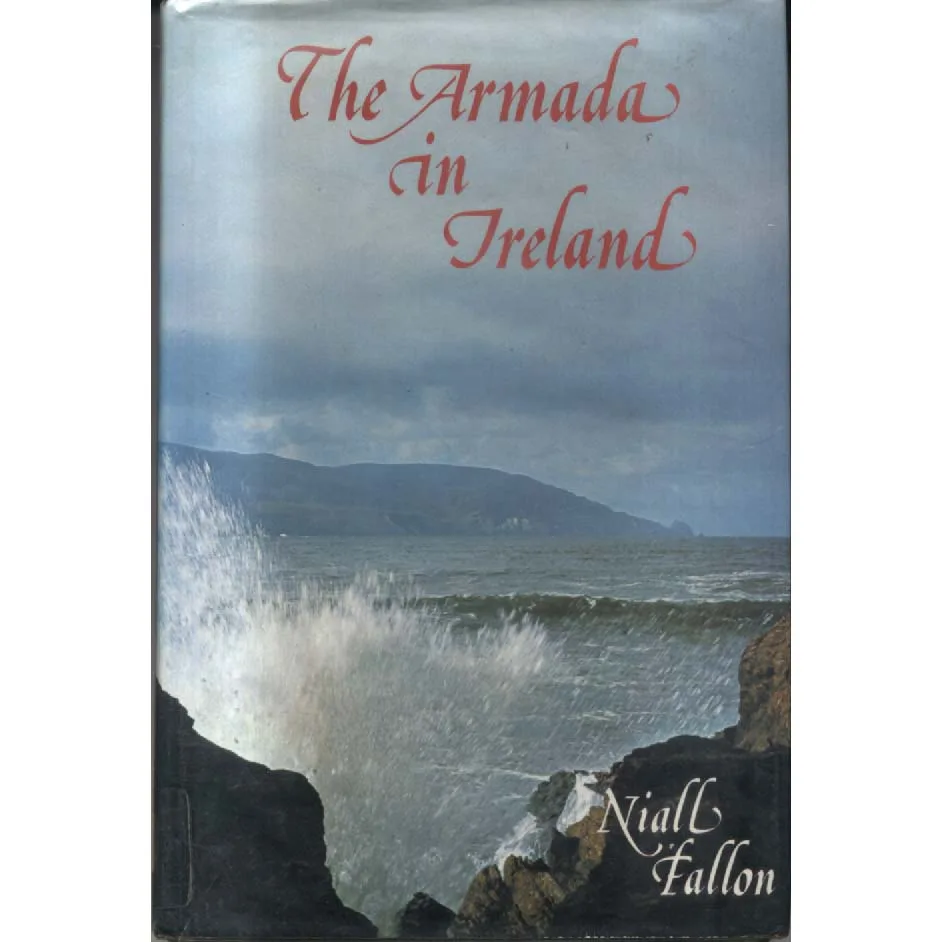
The Armada in Ireland (1978) by Niall Fallon
Stanford Maritime | ISBN: 054007151X
Condition: Good (Ex-Library)
As sold by Crappy Old Books
You know the Spanish Armada. Everyone knows the Spanish Armada. It’s practically a cultural shorthand for “ambitious plan meets weather.” But what most people don’t dwell on — because it’s inconveniently soggy, complicated, and involves far too many rocks — is what happened when the Armada didn’t simply “fail” in the abstract, but scattered itself in very real pieces along the coast of Ireland.
That is where The Armada in Ireland comes in: a book that takes the grand, poster-friendly tale of imperial Spain and politely drags it into the Atlantic, where the wind is rude, the coastline is unforgiving, and history is written in wrecks, survivors, rumours, and local memory.
Niall Fallon’s focus is deliciously specific: not the glorious “we shall invade England” bit, but the aftermath — ships trying to limp home, storms doing what storms do, desperate decisions made in the dark, and the grim lottery of landfall on an unfamiliar shore. It’s maritime history at its most human: navigation, logistics, panic, courage, and the unstoppable power of geography to ruin a perfectly good strategy.
Expect drama, but not the tidy kind. This isn’t a single climactic battle with clear winners and losers; it’s a sprawling coastal tragedy told through incidents: wreck sites, scattered crews, encounters with local populations, and the political danger of being the wrong man washed up in the wrong place at the wrong time. The sea doesn’t care about your empire. The Irish coast, famously, also does not care about your empire.
There’s also a peculiar romance to the subject. Armada wrecks have that magnetism: half history, half treasure-hunt, half ghost story told in a pub with a map on the table. The details matter — bays, headlands, currents, weather patterns, what was carried, what was salvaged, what vanished. It’s the kind of history that feels physical: you can picture timbers grinding on rock, hear the wind, taste the salt, and imagine the terrible relief of seeing land… immediately followed by the horror of realising the land is not interested in helping.
And because this is published by Stanford Maritime, there’s an extra layer of ship-nerd satisfaction: the sort of book that knows ships are not just props, but complicated machines filled with people making practical decisions under impossible conditions. It’s the unglamorous reality behind the legend — and that’s always the best bit.
Now, let’s talk about this copy: Ex-library. Which means it comes with institutional swagger. It has been stamped, shelved, catalogued, and quietly judged by librarians. It has probably survived decades of curious fingers, earnest students, and at least one person who opened it looking for pirates and found geopolitics instead. Ex-library books are like historical artefacts in their own right: slightly marked, slightly weathered, but carrying the faint thrill of public service. A book about shipwrecks that has itself been rescued from official oblivion — poetic, really.
Condition is Good, meaning it’s ready to be read without ceremony. Perfect for anyone who likes their history salt-stained, detail-rich, and far more interesting than the clean textbook version.
From Crappy Old Books: because the Armada didn’t just “fail” — it arrived, in pieces, in Ireland… and left stories behind that the sea is still trying to keep.
Keep browsing: See more History books Other books by Niall Fallon
